Artificial Intelligence (AI)
- What it is: AI is a field of computer science focused on creating smart machines that can perform tasks that typically require human intelligence, like learning, reasoning, and problem-solving
- How it works: AI systems learn from vast amounts of data, identifying patterns to make predictions or decisions without being explicitly programmed for every scenario. Think of it as teaching a computer by showing it a million examples instead of writing a million rules.
- Where you see it: You’re using AI every day in navigation apps like Google Maps, personalized recommendations on shopping sites, spam filters in your email, and virtual assistants like Gemini Live.
- Why it matters: AI helps us solve some of the world’s toughest challenges—from accelerating medical research to creating more efficient supply chains and tackling climate change.
The History of AI
The idea of machines that can think for themselves isn’t new. Concepts of artificial beings with intelligence stretch back decades, however, the modern field of AI truly began to take shape in the mid-20th century. Let’s take a look at the history of AI as we know it:
- The Seeds of AI (1940s-1950s): The invention of programmable computers in the 1940s sparked imaginations. In 1950, Alan Turing proposed the “Turing Test,” a way to gauge if a machine could exhibit intelligent behavior indistinguishable from a human. This was a critical philosophical and scientific step.
- The Birth of a Field (1956): The Dartmouth Summer Research Project, organized by pioneers like John McCarthy, is widely considered the official birth of AI as an academic discipline. It was here that the term “artificial intelligence” was coined.
- Early Successes and Challenges (1960s-1970s): Researchers developed early AI programs, like ELIZA, a chatbot that could simulate conversations, and Shakey the Robot, one of the first robots to reason about its environment. However, the complexity of creating true intelligence led to periods of reduced funding and progress, often called “AI Winters.”
- Revival and Growth (1980s-2000s): The development of expert systems and later, the rise of machine learning, breathed new life into AI research. Milestones like IBM’s Deep Blue defeating a chess grandmaster in 1997 showcased AI’s growing capabilities.
- The Modern AI Boom (2010s-Present): Advances in computing power, the availability of massive datasets, and breakthroughs in deep learning, especially with neural networks, have fueled the current AI revolution. This era has seen the emergence of powerful tools that are transforming industries.
The cutting edge: generative AI, LLMs, and the rise of AI agents
In recent years, two of the most exciting advancements in AI have been generative AI and large language models (LLMs). However, the frontier is rapidly expanding with the emergence of AI agents and agentic AI, which represent a significant step towards more autonomous and capable AI systems.
- Generative AI: This is a type of AI that doesn’t just analyze data; it creates new content. Think of it as an AI artist, writer, or even coder. Generative AI learns the patterns and structures within vast amounts of data (text, images, code, and more.) and then uses that knowledge to produce entirely new, original content based on prompts. Tools like DALL-E for images and ChatGPT for text are prime examples.
- Large Language Models (LLMs): These are the engines powering many of today’s most sophisticated AI applications, especially in text-based tasks. LLMs are large AI models trained on massive datasets of text and code. They excel at understanding, generating, and manipulating human language. Because they’ve processed so much information, they can answer complex questions, summarize documents, translate languages, write creative content, and even generate computer code. These models are becoming increasingly capable, even developing “emergent abilities” like solving math problems and writing code, though it’s always wise for developers to review and validate AI-generated code. LLMs are also becoming multimodal, meaning they can understand and process not just text, but also images, audio, and video.
- AI agents: These are AI systems designed to perceive their environment, make decisions, and take actions to achieve specific goals. Unlike a simple chatbot that responds to a direct command, an AI agent can:
- Plan: Break down a complex goal into a series of smaller, manageable steps
- Reason: Use its knowledge and understanding to make decisions at each step
- Act: Interact with digital or even physical environments (through APIs or robotic interfaces) to carry out its plan
- Learn/Adapt: Potentially learn from its experiences to improve its performance over time
- Agentic AI: This refers to the capability of AI systems to operate autonomously in the manner described above.
For software developers, this may be particularly interesting because AI agents can be programmed to interact with software development tools, APIs, and even existing codebases. This opens up possibilities for AI to assist in more complex development tasks, such as automatically testing new features, refactoring large sections of code, or even managing project workflows. The ongoing research is focused on making these agents more reliable, efficient, and safe as they gain more autonomy.
Myths
Myth: AI is conscious and has feelings.
Reality: AI systems can process and even simulate emotions, but they do not possess consciousness, self-awareness, or genuine feelings. They are complex pattern-matching machines.
Myth: AI is always objective and unbiased.
Reality: AI is only as good as the data it’s trained on. If the data reflects human biases, the AI will learn and perpetuate them.
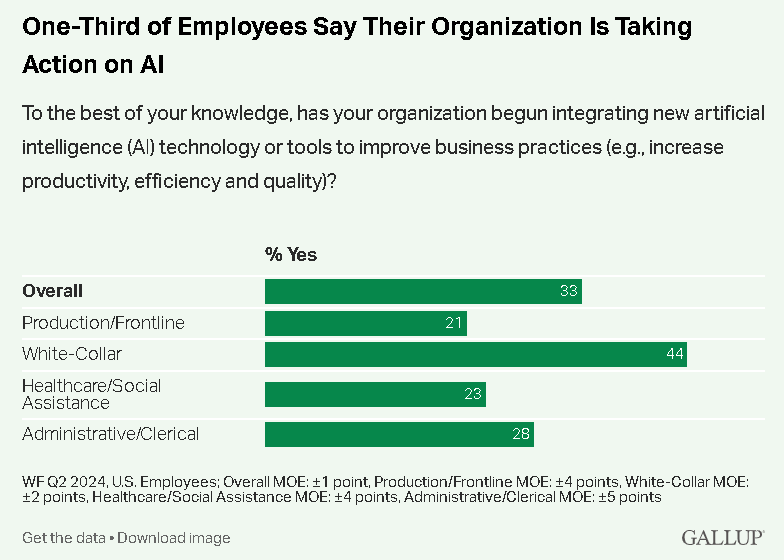
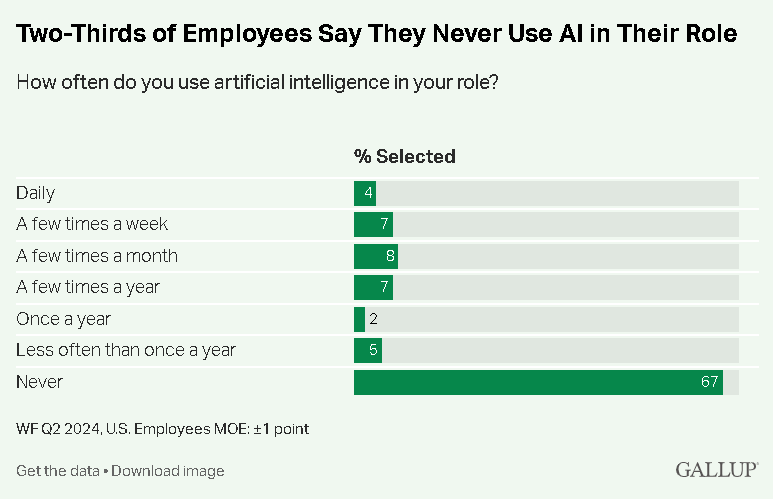
Myth: AI will take over all human jobs
Reality: While AI will certainly automate many tasks, it’s more likely to augment human capabilities, freeing us up for more creative, strategic, and empathetic work.
Website Links
- Site: ChatGPT Video: How to Use ChatGPT (2025)
- Synthesia: Avators Tonydiaz.com AI section: https://itcyber.ai/ai-tools/
- Website: Get started with Elementor AI Video: Elementor AI – Tutorial